The Trademark Wars of the Lexicon: Who Actually Owns 'Yas' (Spoiler: Not You, Not Me, and Definitely Not That App)
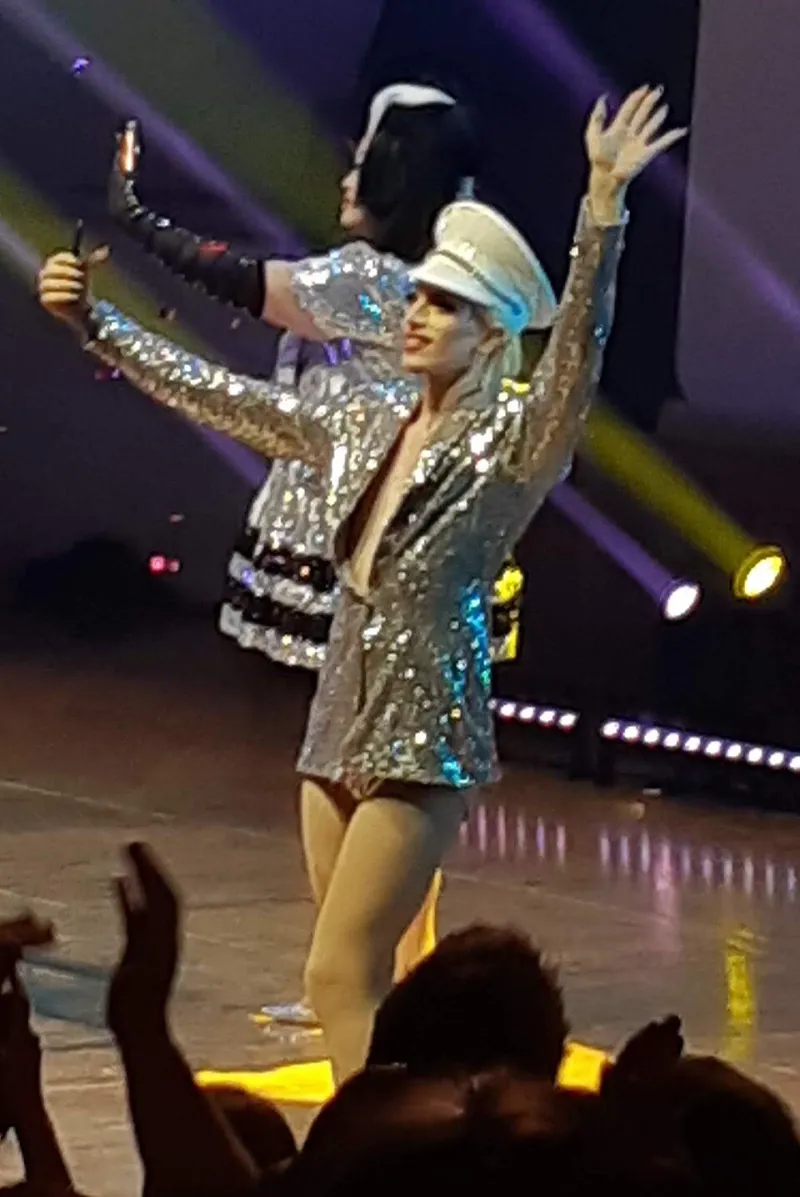
Photo: Armadillopteryx, CC0, via Wikimedia Commons
There's a moment in every gay's life when they hear their mother say 'throwing shade' at a brunch and realize the language has left the house. Not just left the house — it's been sold, sublet, flipped on Zillow, and is now being marketed back to us as a limited-edition collab.
This week, we went down a rabbit hole of trademark filings, licensing deals, and one very confusing cease-and-desist, all to answer a simple question: who owns the words that queer culture built?
The Short Answer: Not the People Who Made Them
Here's the tea, and it's lukewarm at best. Terms like 'yas,' 'shade,' 'reading,' 'tea,' and 'realness' were forged in the ballrooms of Harlem in the 1970s and '80s — spaces largely created by Black and Latino queer people who had been kicked out of everything else. These were survival tools. A coded language for a community that couldn't afford to be legible.
Fast forward to now, and 'throw shade' appears in marketing decks for everything from rosé brands to HR software. 'Yas' has been spoken on network morning shows by hosts who could not name a single legendary ball category. The lexicon didn't just go mainstream — it got acquired.
The Streaming Siphon
Let's talk about the big one. Drag Race didn't invent 'sashay away' — variants of it circulated in drag and ballroom circles for years — but the machine around it certainly industrialized the phrase. Every elimination catchphrase, every 'Shantay, you stay,' is now intellectual property adjacent, wrapped in a production company's legal blanket. When other shows, advertisers, or local drag brunches riff on the language, there's a whole apparatus ready to remind them whose house it technically is.
And it's not just one network. Streaming platforms have spent the last decade quietly filing trademarks on phrases that originated in communities of color, then licensing them back through merch drops, ad campaigns, and 'officially licensed' drag content. The house always wins, baby. Especially when the house is a media conglomerate with a diversity initiative and a legal department.
The Plunder Scorecard
You asked (nobody asked), so we delivered. Our completely scientific, emotionally charged rankings of who deserves the People's Choice Award for Cultural Plunder:
🥇 Gold — Big Streaming, obviously. For taking community-built language, slapping it on Emmy campaigns, and calling it 'elevating the culture.' Ma'am, you didn't elevate it. You put a price tag on it and called the price tag a trophy.
🥈 Silver — Corporate Brand Twitter. Every time a luggage company tweets 'we're throwing SHADE at these prices 💅,' an angel in the ballroom scene loses its wings. You are not one of us. You have never been one of us. Please log off.
🥉 Bronze — Morning Show Hosts. Saying 'yas queen' on live television with the confidence of someone who learned it from a caption. The vibe is 'auditioning for an allyship award that doesn't exist.'
Dishonorable Mention — The Trademark Squatters. The individuals and LLCs who file on phrases they had nothing to do with creating, then send C&D letters to the actual artists. If there's a special circle of hell, we hope it's an open bar with a two-drink minimum and no seating.
But Here's the Actual News
Beneath the camp, there's a real fight happening. Artists and ballroom elders have been pushing back — some through formal challenges to trademark filings, others the old-fashioned way: by refusing to license, by teaching the history, by showing up at brunches and correcting the record with a smile that could cut glass.
Organizations led by ballroom community members are working to document the origins of this language so the record can't be laundered. Some drag performers have started adding 'cultural credit' clauses to their contracts. Others have gone the trademark route themselves — not to gatekeep, but to prevent corporations from filing first. It's defensive warfare with a beat drop.
The point isn't that language should be locked down. Queer slang has always traveled, always been borrowed, always mutated. That's the beauty of it. The point is that the people who created it — many of whom are still alive, still performing, still underpaid — should be in the room, and on the check, when it gets used.
The Verdict
RuPaul doesn't own 'sashay away.' A streaming platform doesn't own 'yas.' A luggage brand definitely, cosmically, does not own 'shade.' These words belong to a community that built joy out of exclusion — and if you're going to use them, honey, at least know where they came from.
Now if you'll excuse us, we need to go file a trademark on 'the tea is SCALDED' before a fintech startup beats us to it.