The Mic Is Hot and So Is Everyone's Breath: A Field Guide to the Queer Live Podcast Taping
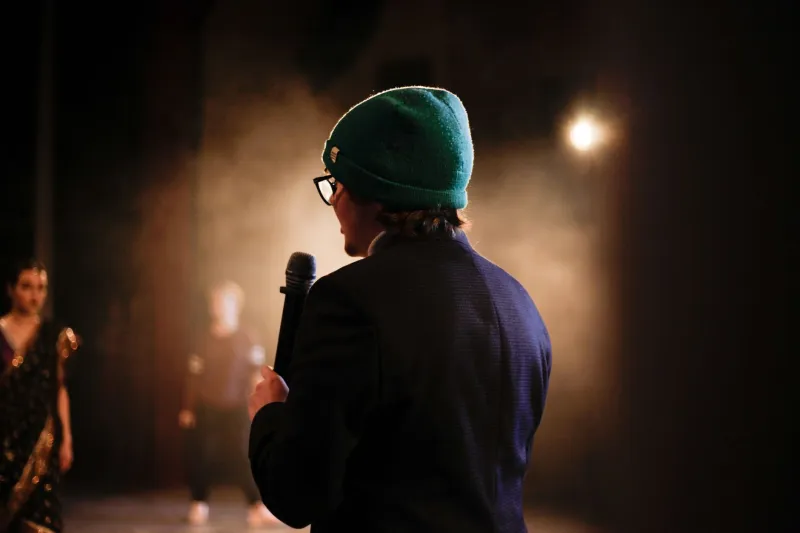
There is a specific smell to a live podcast taping. It is the smell of a rented theater, a borrowed Yeti mic, and two hundred people who just realized they are all breathing the same air while a host says, “Can everyone hear me in the back?” This is not a concert. It is not stand-up. It is a group therapy session with a merch table and a SoundCloud link, and it is the hottest ticket on the queer comedy circuit right now.
The format is deceptively simple: three friends who started recording in a closet are now touring a live version of their podcast, which means you are paying forty dollars to watch people talk into microphones the way they do in your earbuds. But the live taping has its own ecosystem, its own etiquette, and its own spectacular failure modes. Consider this your survival manual.
Rule One: Your Laugh Is Content, Not a Personality
At a live taping, the audience is not passive. You are a laugh track with a pulse. The hosts will pause for you. They will look directly at you—that is the parasocial eye contact—and you will feel seen in a way that is both thrilling and slightly threatening. Do not confuse this with friendship. You are not in the group chat. You are in a rented room with a two-drink minimum and a producer who is silently begging you to stop shouting “I love you” during the emotional beat.
Laugh when it is funny. Do not laugh to prove you got the reference. The hosts know. Everyone knows. The person next to you in the Carhartt beanie knows. This is not a competition for who is the best queer. It is a podcast. Sit down.
The Audio Glitch Is Not a Metaphor (But We Can Make It One)
There will be a glitch. This is not pessimism; it is physics. Somewhere between the opening banter and the first guest, a cable will betray the room. A mic will die. A feedback loop will shriek like a dying Roomba. The host will say, “Is this thing on?” and the audience will laugh, and the producer in the back will age ten years in real time.
The glitch is part of the show. Treat it like a shuttle launch: a brief, terrifying pause before the good stuff. If there is no glitch, check your ticket. You may be at a corporate keynote about synergy. The queer live podcast taping is held together by gaffer tape, vibes, and the shared belief that the episode will be fixed in post.
The Guest Who Would Like to Tell You About Their Patreon
Every live taping has one guest who is technically there to promote something. They have a new special, a new album, or—most commonly—a Patreon with tiered rewards. You will learn about these tiers whether you want to or not. Silver gets you the extended cut. Gold gets you a monthly voice memo. Platinum gets you the guest’s honest opinion about their father.
The etiquette here is delicate. You cannot boo; that is unkind and also bad for the room. You can buy a sticker at the merch table to make it stop, but it will not make it stop. The Patreon pitch is not a digression; it is the backbone of the queer comedy economy. The guest is not ruining the show. The guest is the show. Adjust your expectations and your wallet accordingly.
The Q&A Always Ends With a Proposal (This Is Tradition)
The host will open the floor for questions, and the floor will immediately become a wedding venue. Someone will propose to the host. Not to a partner—to the host. This happens at every taping, in every city, with the same nervous laugh and the same ring pop. It is not a real proposal. It is a ritual. The host will deflect, the audience will cheer, and the producer will note the timestamp for the clip that will do numbers on TikTok.
Other Q&A staples include: a stranger asking for life advice that belongs in a therapist’s office, a person reading a poem they wrote in the parking lot, and someone who just wants to say “thank you for making me feel less alone” in a way that makes everyone cry. You are allowed to cry. Bring tissues. Do not bring a ring unless you mean it—and even then, maybe send an email instead.
The Merch Table Is the Final Boss
The taping ends, the lights come up, and you are released into the lobby where a folding table holds tote bags, candles, and a T-shirt that says something deeply unhinged in a font that only works on a tote bag. This is not optional. You will buy something. You will feel good about it. You will later wonder why you own a $35 candle that smells like “group chat.” The answer is simple: you are not just an audience member. You are a patron of the arts, and the arts are three queers with a microphone and a dream.
The live podcast taping is messy, sweaty, and occasionally inaudible. It is also the closest thing to a queer community center that costs money and serves alcohol. Go. Laugh. Buy the tote. Do not propose to the host unless you have discussed it with your partner and your therapist. And when the episode drops next Thursday, listen for your own laugh. It will be there, preserved forever, slightly too loud, exactly as it should be.